
Tag: featured

Texas Hemp Policy at a Crossroads: Episode 280 Examines Federal Restrictions and the 2027 Legislature

Texas hemp policy, federal restrictions on intoxicating hemp products, and the upcoming 90th Texas Legislature are the focus of Blazed Weekly News Episode 280, featuring Sarah Todd of the Texas Cannabis Policy Center and João Mitchell of the Texas Cannabis Collective. AUSTIN, Texas — November 22, 2026. With Texas lawmakers preparing for the 2027 legislative session, the future of consumable hemp products and cannabis reform remains a pressing question for retailers, patients, and policymakers.

Watch the Episode 280 Discussion

Two Policy Voices Join the Conversation

The episode features Sarah Todd of the Texas Cannabis Policy Center and João Mitchell of the Texas Cannabis Collective. The discussion is situated at a pivotal moment for state and federal cannabis policy, as advocates and businesses prepare for potential changes to hemp and marijuana regulation.

Federal Hemp Restrictions and the Texas Market

Federal proposals restricting certain intoxicating hemp-derived products could affect manufacturers, distributors, and retail businesses in Texas. The key policy questions include which products would remain lawful, what transition periods may apply, and how federal restrictions would interact with state rules. The precise status and legal effect of any federal action must be evaluated against enacted statutory text and official agency guidance.

What the 90th Legislature May Consider

Texas lawmakers have pre-filed adult-use cannabis proposals, including HB 362 and HB 369. Those introduced bills contemplate legal possession, home cultivation, and a licensed commercial marijuana market, while excluding hemp and consumable hemp products from the proposed definition of cannabis. Neither bill has become law. For the existing hemp industry, the central question is whether a new adult-use framework would provide a workable path for established retailers or leave them operating under a separate set of requirements.

Why the Discussion Matters for Hemp Retailers

Retailers are watching potential changes to licensing, product testing, labeling, enforcement, and federal legality. Clear distinctions between medical cannabis, adult-use marijuana, and consumable hemp will be important in evaluating any legislation. Watch the full Episode 280 video above for the guests’ perspectives. This article is an editorial overview of the policy subjects and does not attribute direct quotations or specific claims to the guests without a verified transcript. Related legislation: HB 362 introduced bill and HB 369 introduced bill.

Texas Marijuana Bills Filed

Texas marijuana legalization bills HB 362 and HB 369 would allow adults 21 and older to grow up to 12 cannabis plants at home and establish licensed recreational marijuana sales if enacted.

AUSTIN, Texas — November 22, 2026 — Texas residents could eventually grow marijuana at home, purchase cannabis from licensed retailers, and possess limited quantities without state criminal penalties under two bills introduced ahead of the 90th Texas Legislature.

House Bill 362, filed by Rep. John Bucy III of Austin, and House Bill 369, filed by Rep. Joe Moody of El Paso, propose the Texas Regulation of Cannabis Act. These are proposals, not current law.

Texans Could Grow Up to 12 Marijuana Plants at Home

Section 491.0051 of both bills would permit adults 21 and older to cultivate up to 12 cannabis plants at a private residence. The plants must be maintained in an enclosed, secured area not visible from a public place. Adults could keep cannabis harvested from those plants at home under the proposed storage rules.

How Much Marijuana Could Texans Possess?

The bills would permit adults to possess and transport up to two ounces of cannabis, including no more than 15 grams of concentrate. Separate rules would apply to cannabis kept securely at home, including homegrown cannabis and up to 10 ounces obtained elsewhere. The proposals would also permit limited transfers between adults without payment.

Licensed Marijuana Stores and Commercial Regulation

The proposed law would establish licensed cannabis growers, retailers, secure transporters, and testing facilities overseen by the Texas Department of Licensing and Regulation. Rules would address product safety, labeling, packaging, and security. Local governments would have some authority over locations and operating conditions.

Proposed Taxes on Cannabis Sales

The legislation proposes a 20 percent retail cannabis tax in addition to existing sales taxes and a separate 15 percent tax on qualifying grower-to-retailer transactions. The bills propose directing revenue to public education, veterans’ assistance, substance abuse prevention and treatment, and local oversight.

Texas Politics and the 2027 Legislative Session

The bills arrive ahead of the January 12, 2027 legislative session, amid a changed political landscape. Supporters see an opportunity to revisit prohibition, while opponents and lawmakers will debate public safety, taxation, regulation, and the impact on existing hemp businesses. A separate Senate measure, SB 237, also proposes an adult-use framework.

Marijuana Arrests Remain Part of the Debate

NORML reported that Texas law enforcement agencies made more than 29,000 marijuana-related arrests in 2025, approximately 98 percent involving simple possession. Advocates cite those arrests in arguments for criminal justice reform.

When Could Legal Sales Begin?

The introduced bills propose an effective date of September 1, 2027, with implementing rules and commercial licensing to follow in 2028. Those dates could change through legislative amendments, and neither bill has passed.

What Happens Next?

The 90th Legislature will decide whether these proposals advance. Until Texas law changes, recreational marijuana remains illegal under state law. Blazed News will continue tracking HB 362, HB 369, SB 237, and the debate over cannabis legalization.

Sources: Texas Legislature, introduced HB 362 and HB 369; NORML, November 17, 2026.

TEXAS HEMP POLICY SHOWDOWN

Jay Maguire and Rod Kight on the fight for a workable cannabis future

Texas hemp businesses face a difficult collision: an opportunity to reshape state policy and a federal deadline that could upend the market before those reforms arrive.

On Blazed Weekly News Podcast #279, Texas Hemp Federation advocate Jay Maguire and cannabis attorney Rod Kight joined Russell Dowden and Rachel Nelson to discuss what comes next. Their message was urgent: businesses need clear rules, consumers need continued access, and political optimism must turn into specific action.

For Maguire, the Texas challenge starts with preserving the businesses already serving consumers.

“Don’t destroy the market just because we have to make some adjustments,” he said.

He urged manufacturers, retailers and advocacy groups to approach lawmakers with a coordinated agenda. Businesses should explain what they need to operate responsibly, while consumers should describe how changes affect their access to products.

Maguire argued that industry problems reflect failures in regulatory design rather than an unwillingness to accept oversight. He called for more inclusive advocacy that brings smaller operators and affected consumers into the legislative conversation.

He also questioned whether Texas’ fragmented approach provides the expertise and accountability a cannabis market requires. Among the possibilities discussed were a dedicated cannabis commission or a more unified framework drawing on the expertise of existing agencies.

His concern extended to enforcement. Maguire called for safeguards against what he described as politically motivated raids and urged policymakers to consider remedies for people improperly targeted. Those were proposals for reform, rather than announcements of an adopted policy.

The discussion also addressed pending Texas litigation. At the time of recording, Maguire said the industry was still awaiting a ruling in attorney David Sergi’s case. He expressed hope for relief while recognizing that an appeal could prolong uncertainty.

Kight’s federal analysis explained why a state victory would resolve only part of the problem.

Federal hemp restrictions are taking effect in stages. November 12 brought exclusions for products containing cannabinoids the cannabis plant cannot naturally produce. Most remaining changes are scheduled for December 11, including a total-THC standard and a limit of 0.4 milligrams per container for finished products, counting THC and certain similar cannabinoids.

Kight warned that the consequences extend beyond intoxicating gummies or flower. Full-spectrum CBD products and intermediate extracts used during manufacturing could also be affected.

He drew a crucial distinction between permission under state law and protection under federal law. A business might remain authorized by its state while losing the federal hemp exemption that supported its business model.

That could bring difficulties involving banking, payment processing, insurance, leases and interstate supply chains.

Tax exposure is another major concern. Kight highlighted Internal Revenue Code Section 280E, which denies ordinary business deductions and credits for businesses illegally trafficking in Schedule I or II substances. Properly calculated cost of goods sold can still reduce gross receipts. Losing deductions for expenses such as advertising and rent could sharply change a company’s finances.

Maguire raised the possibility of Congress restricting enforcement spending as a temporary measure. Kight acknowledged the potential value of a stopgap but warned that reduced enforcement would not, by itself, reverse a product’s federal classification or erase the resulting business problems.


TEXAS HEMP POLICY SHOWDOWN

DEA JUDGE JULIUS TELLS “SAM” NO MORE SKED3 DELAYS – RE-OPENS CASE ON NOV.5–

With a likely loss in Mass’ retail MJ rollback– the millions in SAM-spending against legal cannabis is burned up.


A SAM-led attempt to stall the DEA’s schedule 3 hearing has been quashed by judge Derek Julius who Oct. 22 said adding more briefings on a Government Accounting Office (GAO)memo about “polices and procedures” is “not before the tribunal, and allowing testimony on it would only serve to confuse the matter”…. adding… ”the GAO is not a party to this litigation, and… “now that the GAO report is a part of the record, no further testimony is required concerning it.” The resked hearing process and Julius’ recommendation to the DEA admin Terry Cole may proceed after Nov. 5th, following any additional filings by SAM(led by Kevin Sabet-Shargi) and its’ GAO stall-movants: Nebraska, Idaho and Indiana.

SAM’s legal warchest–funding the law firm of former Trump AG Bill Barr– has now spent millions to thwart the resked movement and has spend over $25Mil. in its (likely unsuccessful) ballot Issue8 to kill retail stores in Massachusetts. Photo below: This year SAM release an anti-MJ slanted documentary– “THC INC”– calling for the end to “Big Marijuana” in the form of MSOs driving psychotic episodes. Also pictured: former Dem Rep. Patrick Kennedy(a SAM co-founder) and SAM’s executive director Luke Niforatas, paid $232,000 annually.


Hiding over $20Mil in undisclosed donations to attack US cannabis access– SAM will still be in court in 2027 trying to hold up a likely DEA rule to remove sked1 status. But first, SAM appears headed for a major voter setback in Massachusetts where SAM has spent millions to bankroll Mass; anti-pot Question 8. And SAM continues to lead the court fight to stop the proposed Medicare-led effort to provide low-potency CBD (up to 3 mg of THC) to senior with an annual $500 benefit for some 62million seniors.
“SAM aren’t going to quietly fade away. Their ties to rehabilitation clinics that profit from court-mandated treatments, particularly for cannabis-related offenses, reveal the financial motivations behind their opposition,” says Texas hemp lawyer Jay McGuire. Other critical reports have also examined Sabets’ claim to be a drug-control expert under Bush, Obama and Clinton– but his millions of secret donors have come mostly from “mandated drug rehab” services which court require parolees/probationers to attend.

Since the GAO report’s issuance, three of the anti-rescheduling parties – DUID Victim Voices, Kenneth Finn, M.D., and the National Drug and Alcohol Association (NDASA) – have argued that the report could provide significant evidence to back their position that cannabis should remain listed in Schedule I.

The DEA has since rejected the report’s weight, arguing that it’s “immaterial to the actual scientific processes and analysis” that it and the U.S. Food and Drug Administration (FDA) use in scheduling controlled substances.

Reporting from Boston’s WGBH: “SAM’s nonprofit status means it is not required to disclose their funding sources, which has led some pro-marijuana groups to label the organization as “dark money”. SAM maintains that it is primarily funded through grassroots donations, family foundations and conference speaking fees. Sabet said they don’t disclose their donors to protect families that might be targeted or harassed if they were made public.

“I’ve been approached by parents who have just spent $250,000 on treatment for their son because of marijuana use addiction,” Sabet said. “They’re afraid to talk about it in public.”

Question 8 has also generated a wave of online speculation that it’s being driven by the alcohol or tobacco lobby to undercut cannabis sales. Sabet dismisses those claims as “conspiracy theories.” “From our point of view, we have nothing to hide,” he said. “I’ve been very open that we are getting money from families that have lived this nightmare.”

McGuire’s Texas Hemp Reporter(with A.I. graphic above) pulled SAMs’ newest federal tax filings from the IRS revealing “a complex trail of millions which Sabet has moved from public to deeply secret spots all aimed at protecting his SAM donors.”

Writes McGuire: “What emerges is a portrait Sabet himself might have sketched, had the subject been anyone else: a $23 million war chest assembled almost entirely in the dark, a disclosed charity quietly starved while its unaccountable political twin balloons.” McGuires’ report: https://lnkd.in/gquTAs-U  
A DEA final order will likely re-enforce MedMJs move to sked3–which may still may occur by Dec 31, 2026.


Texas Doesn’t Need a Hemp Ban. It Needs a Rulebook.


By Michael A. Davis


Texas has legitimate reasons to regulate hemp-derived cannabinoid products, particularly those containing intoxicating compounds that may be mistaken for ordinary candy, beverages, or other everyday products. Parents deserve protection for their children, consumers deserve accurate information, and responsible businesses deserve clear rules they can follow.


The question is whether Texas can achieve those goals through effective regulation rather than relying on broad restrictions that eliminate lawful opportunities alongside unsafe products. Consumer protection should be the priority, but prohibition should not automatically become the only policy option.


Put Consumer Safety First

Texas already regulates consumable hemp products under Chapter 443 of the Texas Health and Safety Code. Lawmakers should build on that foundation by enforcing a minimum purchase age of 21 for intoxicating products, requiring identification checks, and imposing meaningful penalties for unlawful sales to minors.


Products should use child-resistant packaging, while advertising should avoid appealing to children or making unsupported medical claims. Independent laboratory testing should verify cannabinoid content and screen for relevant contaminants, including pesticides, heavy metals, and residual solvents.


Labels should clearly disclose ingredients, serving sizes, cannabinoid content, and appropriate warnings about impairment and accidental ingestion. Testing must also distinguish between delta-8 THC, delta-9 THC, THCA, and other cannabinoids so consumers are not misled about what they are purchasing.


Establish Clear Rules for Businesses

A workable regulatory system needs transparent licensing standards for manufacturers, distributors, and retailers, along with inspections, traceable production records, and an effective product-recall process. Fees and compliance requirements should be proportionate to the activities involved, allowing regulators to focus resources where risks are greatest.


Enforcement should distinguish between correctable administrative mistakes and serious misconduct. Falsified laboratory results, deliberate sales to minors, misleading product claims, and repeated violations should trigger meaningful consequences, including fines, recalls, or license suspension when warranted.


Texas should also publish enforcement data and regularly review its rules so lawmakers and the public can evaluate whether the system is improving consumer safety.


Respect the Law

Regulation cannot make every cannabinoid product legal. Federal law is changing, and products that no longer qualify as hemp under applicable federal definitions may face federal controlled-substance restrictions. Texas must ensure its framework complies with federal law rather than promising businesses protections the state cannot legally provide.


Within those boundaries, lawmakers should clearly identify which products may legally be sold, which require additional controls, and which are prohibited. Clear guidance would help consumers understand their options while giving compliant businesses a more predictable legal environment.


Texas Lawmakers Must Act

The Texas Legislature should enact a comprehensive Hemp and Cannabinoid Consumer Protection and Regulation Act establishing statewide standards for age verification, independent laboratory testing, child-resistant packaging, accurate labeling, responsible advertising, licensing, and enforcement.


The legislation should assign clear responsibilities to state regulators, establish meaningful penalties for violations, and require regular public reporting. Periodic reviews of safety data and enforcement outcomes would allow Texas to respond to emerging risks without leaving responsible businesses trapped in continuing legal uncertainty.


The choice before Texas is not simply whether to permit or prohibit hemp-derived cannabinoid products. It is whether the state will establish enforceable rules that protect children, inform consumers, hold bad actors accountable, and provide clarity for businesses operating within the law.


Texas lawmakers should stop treating this issue as a choice between unrestricted sales and sweeping prohibition and put a comprehensive, evidence-informed regulatory framework into law. Texans deserve protections that can be enforced, businesses deserve rules they can understand, and the public deserves a system measured by its results.

ZINGIEZ: THC FOR THE CONSUMER WHO DOESN’T WANT TOO MUCH

With just 1 mg of hemp-derived Delta-9 THC per tablet, Zingiez is targeting an overlooked part of the market: consumers who want control—not maximum potency.

For years, the cannabis and hemp industries have largely marketed THC with one assumption:

More is better.

More milligrams. Stronger gummies. Bigger servings. Higher potency.
But there is an enormous group of consumers being underserved by that approach.
Some are THC-curious consumers who have stayed away because they don’t want to get overwhelmingly high. Others tried an edible once, took too much and decided the experience wasn’t for them.

And then there is another consumer the industry sometimes forgets entirely:

The experienced THC consumer who knows exactly what they DON’T want.

They’ve been around cannabis. They understand THC. And they may no longer be interested in getting completely blasted just because they want to consume it.

That’s where Zingiez gets interesting.

ONE MILLIGRAM CHANGES THE CONVERSATION

Zingiez takes a radically different approach to dosing.

Each chewable tablet contains just 1 mg of hemp-derived Delta-9 THC, and each pocket-sized tin contains 100 tablets.

That means the consumer—not the manufacturer—essentially determines the serving.

Want 1 mg? Take one.
Want 2 mg? Take two.
Someone comfortable at 5 mg can count out five.
Instead of cutting a gummy into quarters or guessing how much THC you’re consuming, Zingiez makes the math remarkably simple.

And that simplicity addresses a genuine gap in today’s THC marketplace.

THE UNDERSERVED CONSUMER
Walk into many smoke shops or browse hemp-derived THC products online and you’ll encounter plenty of products built around potency.
But where is the product for the person who says:
“I want to feel something. I just don’t want to feel THAT much.”
That’s a legitimate consumer.
Maybe they want to socialize without feeling overwhelmed. Maybe they want greater control over their experience. Maybe 10 mg is simply far more THC than they personally prefer.
THC affects people differently, so no particular dose guarantees a particular experience. But giving consumers smaller increments gives them something extremely valuable:
Control.
Zingiez makes 1 mg the starting point rather than asking consumers to work backward from a much larger serving.
AND THEN THERE’S THE EXPERIENCED CONSUMER
This may be the more surprising opportunity.
Low-dose products are often marketed almost exclusively toward beginners.

They shouldn’t be.

There are experienced cannabis consumers who have already gone through the high-potency phase. They’ve eaten the strong edible. They’ve smoked the strongest flower. They’ve taken the heroic dab.

They know what THC can do.

And they know what they don’t want.

They don’t necessarily want 25 mg.

They don’t necessarily want to lose the rest of their evening.

They don’t necessarily want every cannabis experience to become an endurance event.

For that consumer, lower-dose THC isn’t necessarily about inexperience.

It’s about experience.

Knowing your limits is very different from discovering them.

A veteran consumer may choose 2, 3 or 5 milligrams precisely because they’ve consumed enough cannabis over the years to understand their own preference.

That’s an audience the industry’s potency race can easily overlook.


2026 BLAZED BEVERAGE OF THE YEAR

2026 BLAZED BEVERAGE OF THE YEAR
Big Flavor, Two Divisions, Six Winners
The 2026 Blazed Magazine Beverage Challenge brought together cannabis-infused drinks from across the market for one of the year’s most competitive THC Challenge categories.

With products ranging from approachable 10mg beverages to triple-digit THC offerings, Blazed divided the competition into two divisions so products could be judged against beverages designed for a similar consumer.

The result: six award-winning beverages and two first-place champions.

25MG & UNDER: WYATT’S PURP TAKES FIRST

In the low-dose division, Wyatt’s Purp Strawberry captured First Place with its 10mg THC cannabis-infused seltzer. The bright strawberry flavor and easy-drinking format put Wyatt’s Purp at the top of a category built around lower-dose beverages.

Moon Ranger Zero Gravity Full Effect Blueberry Lemonade, also at 10mg THC, earned Second Place. Its combination of blueberry and lemonade gave the category a completely different flavor profile.

Taking Third Place was Modern Herb Co. Cherry Vanilla Cola, a 10mg THC craft soda combining the familiar character of cola with cherry and vanilla.

Together, the three winners demonstrate how much variety now exists in the lower-dose beverage market—from sparkling seltzers to fruit-forward drinks and traditional craft sodas.

HIGH-POTENCY: UNCLE SKUNK’S WINS THE CROWN

The high-potency division brought a very different group of contenders.

Uncle Skunk’s Grape earned First Place with its 100mg THC cannabis-infused, non-alcoholic beverage. The grape-flavored entry claimed the top position in a category aimed at consumers looking for substantially higher potency.


Chronic Harvest Half Tea / Half Lemonade finished Second Place. The 150mg THC beverage brings the familiar combination of tea and lemonade into a much stronger cannabis-infused format.

Zour Pop Strawberry Punch, a 100mg THC beverage, rounded out the podium in Third Place, adding another fruit-forward option to the high-potency winners.


A BEVERAGE CATEGORY THAT KEEPS GROWING

What stands out in the 2026 results isn’t simply potency. It’s choice.

Consumers now have cannabis beverages ranging from 10mg seltzers designed for a lighter experience to 100mg-and-above products created for a very different segment of the market. The flavors are expanding just as quickly: strawberry, blueberry lemonade, cherry vanilla cola, grape, tea and lemonade, and strawberry punch all reached the winners’ podium this year.

That diversity is precisely why Blazed Magazine separated the competition into two divisions. A 10mg beverage and a 100mg beverage serve very different consumers, and each deserves to be evaluated in the appropriate field.

Congratulations to Wyatt’s Purp and Uncle Skunk’s, the two First Place champions, and to all six brands earning a spot among the 2026 Blazed Magazine Beverage of the Year winners.


200,000 Americans Arrested for Marijuana Possession

Despite marijuana legalization spreading across the United States, more than 200,000 Americans were arrested for marijuana possession in 2025, according to the FBI’s latest national crime data.

The numbers highlight a continuing contradiction in American cannabis policy: marijuana is legally regulated for adult use in nearly half the country, while hundreds of thousands of people are still entering the criminal justice system over cannabis.

Marijuana Arrests Increased in 2025

FBI data shows 200,960 marijuana possession arrests in 2025, up from 187,792 in 2024. Another 17,192 arrests involved alleged marijuana sales or manufacturing, compared with 16,244 the previous year.

Altogether, marijuana accounted for approximately one-quarter of all drug arrests, more than any other specifically identified substance. About 92 percent of cannabis-related incidents involved possession rather than sales or manufacturing.

The reported increase comes despite the longer-term decline in marijuana enforcement that has accompanied legalization and decriminalization across much of the country.

Legal in One State, an Arrest in Another

Twenty-four states have legalized and regulated marijuana for adults, creating a dramatically different legal landscape than existed a decade ago.

Yet cannabis remains subject to a patchwork of state and federal laws. Conduct that is perfectly legal at a licensed dispensary in one state can potentially result in criminal charges after crossing into another jurisdiction.

That divide remains particularly relevant across the Southwest, where cannabis laws can change significantly simply by crossing a state line.

The Numbers Could Be Even Higher

There is another important caveat to the FBI figures: they don’t necessarily capture every marijuana arrest.

About 13 percent of state and local law-enforcement agencies did not contribute data for 2025, according to the report. The FBI uses estimation procedures to compensate for incomplete reporting, and changes in reporting methodology have also made year-to-year comparisons more difficult.

That means the 200,960 possession figure should be viewed as part of a broader national picture rather than a perfect accounting of every cannabis arrest.

Federal Marijuana Policy Is Changing, Too

The enforcement numbers arrive while federal marijuana policy continues undergoing one of its most significant changes in decades.

The federal government is moving through the process surrounding marijuana’s placement under the Controlled Substances Act, with the DEA arguing in its recent filing that cannabis no longer meets the statutory requirements for Schedule I and that its abuse and dependency profile more closely aligns with Schedule III substances.

But changing marijuana’s federal scheduling status does not automatically legalize recreational marijuana nationwide or erase the state laws responsible for many possession arrests.

America Still Has Two Cannabis Systems

The latest FBI numbers illustrate where American cannabis policy stands in 2026.

There is now a multibillion-dollar regulated cannabis industry operating legally across much of the country. Millions of Americans can purchase marijuana from licensed businesses and states collect substantial tax revenue from those transactions.

At the same time, more than 200,000 marijuana possession arrests were recorded in a single year.

Until federal and state cannabis laws become more consistent, Americans will continue living under two very different systems—one where cannabis is a regulated consumer product and another where possessing it can still mean handcuffs, court dates and a criminal record.

Source: FBI crime data, as reported by Marijuana Moment.

Houseplant Has Grown Far Beyond the Dispensary

How Seth Rogen and Evan Goldberg turned a cannabis launch into a high-end lifestyle brand

Houseplant may have started with cannabis flower, but these days the company is just as likely to
sell you a sculptural ashtray, a ceramic planter, a hidden-storage side table or a three-milligram
THC sparkling water.


That is not the usual path for a celebrity cannabis brand.
Most begin with a famous name, a licensing agreement and a jar of flower that looks a lot like
everything else on the dispensary shelf. Houseplant had some of those familiar ingredients at the
beginning, but Seth Rogen, Evan Goldberg and their partners kept building until the company
became something far more interesting.

Today, Houseplant exists somewhere between a cannabis company, a design studio and a home-
entertaining brand. It is also unapologetically high-end. Flower may have opened the door, but

the larger opportunity turned out to be everything surrounding it.
Rogen and Goldberg never had to convince anyone that they actually liked cannabis. The
childhood friends from Vancouver had been writing together since they were teenagers,
eventually creating movies including Superbad and Pineapple Express. Cannabis was already
woven into their work and public identities long before they decided to attach their names to a
product.

They developed Houseplant with entrepreneur Michael Mohr and other partners as Canada
prepared to legalize adult-use cannabis nationwide. The company began working with Canopy
Growth in 2018, and when the partnership was publicly announced the following year, Canopy
provided the licensed production, regulatory infrastructure and distribution network needed to
place Houseplant flower, pre-rolls, softgels and beverages in Canadian stores.
For Houseplant, the relationship offered immediate access to a national market. For Canopy, it
delivered a premium brand backed by two founders whose relationship with cannabis felt
genuine rather than manufactured. That mattered then, and it still does. Cannabis consumers have
always been particularly good at spotting the difference.


Houseplant entered the United States independently in March 2021, launching in California with
flower and a collection of smoking accessories and home goods. The debut generated enough
attention to crash the company’s website, and its initial cannabis inventory reportedly sold out
within 24 hours.


A few months later, Houseplant and Canopy ended their Canadian partnership. Both sides
described the separation as mutual. Canopy was concentrating on brands it controlled outright,
while Houseplant wanted to shape its future around the identity taking form in the United States.
Because Canopy had never been involved in the American operation, the split did not affect
Houseplant’s U.S. business.

Looking back, the breakup feels less like the end of something and more like the moment
Houseplant became its own company.


Houseplant describes its mission simply: making nice things for people who love weed.
That pretty much says it all.
Cannabis consumers have spent generations improvising. A coffee mug becomes an ashtray. A
kitchen drawer becomes a stash box. A chipped dinner plate becomes a rolling tray. Even people
with beautifully designed homes often end up smoking over something that looks like it came
free with a gas-station lighter.


Houseplant saw the problem and decided cannabis consumers deserved better.
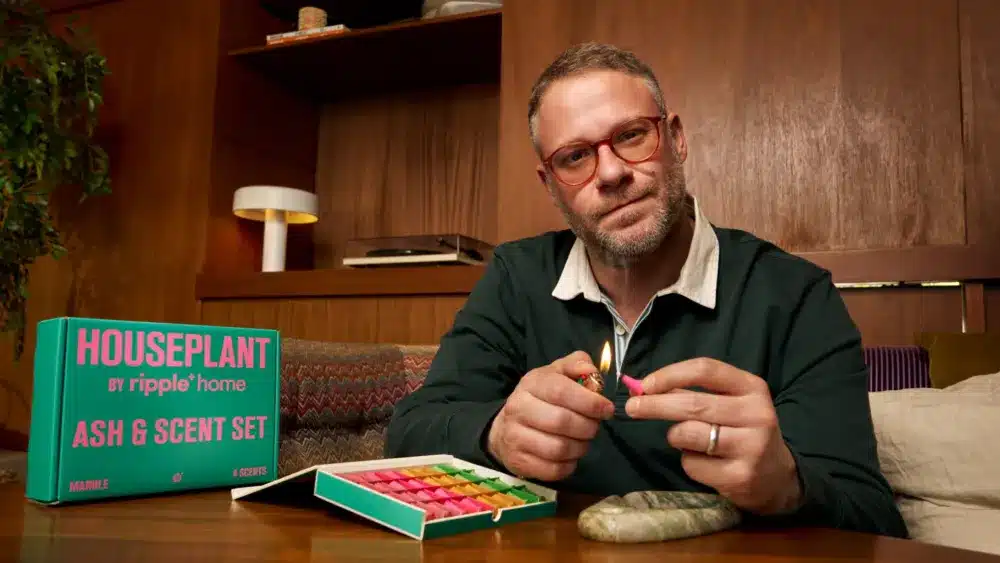
Its collection has included ceramic ashtrays, rolling trays, grinders, stash jars, lighters, planters,
vinyl records, incense and furniture. Some pieces are straightforward and functional. Others are
the kind of objects people ask about the moment they walk into the room.
The brand is also very clear about the customer it is targeting. Houseplant is not aimed at
someone looking for a ten-dollar grinder or a novelty ashtray from the corner smoke shop. A
ceramic ashtray can cost close to $100, a side-table ashtray around $200 and its hidden-storage
Stash Table nearly $500.


Those prices will not appeal to everyone, and that appears to be intentional.
Houseplant is selling to cannabis consumers who already spend money on furniture, art, records,
barware and the other objects they choose to live with. The company is betting that those same
customers will pay more for smoking accessories that look like they belong in the room.
Nobody thinks twice about a whiskey drinker displaying a bar cart, crystal decanters and
expensive bottles. Cannabis accessories, on the other hand, are still commonly shoved into a
drawer before company arrives.
Houseplant treats that as a design failure.


Its answer is simple: make the ashtray nice enough that nobody wants to hide it.
Rogen’s interest in ceramics helped give the company its visual identity. What began as a
personal pottery hobby became closely tied to Houseplant’s product-development process. His
handmade ashtrays and vases began appearing across social media, recognizable by their
rounded forms, heavy glazes and slightly strange, handmade personality.


Houseplant eventually translated that look into commercial products, including ashtrays,
planters, vases, espresso cups and pieces from its colorful Gloopy collection. Many grew from
Rogen’s own designs and ceramic experiments.
His involvement appears to go far beyond posing for a campaign and approving whatever gets
placed in front of him. Houseplant says its team tests products before releasing them, and Rogen
has discussed taking prototypes home and using them for extended periods.


That may sound like a small detail, but anyone who actually smokes understands why it matters.
A beautiful ashtray that cannot comfortably hold a joint, contain ash or survive regular cleaning
is just expensive clutter. At the company’s Los Angeles headquarters, Houseplant also assembled a large collection of
vintage ashtrays. Old Italian, American and midcentury designs became inspiration and research
material.

The collection says a lot about the company’s approach. Houseplant did not invent the decorative
ashtray. Earlier generations already understood how to make smoking accessories feel like part
of a room. Houseplant simply updated the idea for modern cannabis consumers.
Rogen is not presenting himself as a master cultivator or extraction expert. He is designing
around something he knows very well: smoking cannabis and dealing with all the little objects
that come with it. That authenticity may be the company’s biggest advantage.
As Houseplant grew, it gradually moved beyond the smoking session itself. The brand expanded
into products connected to music, coffee, dining and entertaining, while collaborations brought it
into rolling papers, apparel, food, travel and interior design.

A partnership with Carbone Fine Food pushed the idea even further. The collection included
Italian-made serving pieces, glassware, pitchers, leather accessories and a ceramic rolling tray.
On paper, a cannabis company collaborating on dinnerware might sound like a stretch. Inside the
world Houseplant is creating, it makes perfect sense.

Dinner, drinks, records, conversation and cannabis can all be part of the same evening.
Houseplant simply refuses to pretend the last part has to happen secretly in the garage.
That may be the company’s most effective contribution to normalization. Houseplant does not
spend much time lecturing consumers about cannabis acceptance. It makes an ashtray attractive
enough to leave beside the expensive lamp.

Sometimes design makes the argument better than a speech ever could.
Houseplant has also returned to a product category it first explored during its Canadian years. In
late 2024, the company launched hemp-derived THC sparkling waters in the United States. Each
can contains three milligrams of delta-9 THC, with no sugar and no calories. Flavors have
included Pineapple, Citrus, Black Cherry and Blood Orange.

The dose is intentionally modest.
“Not every situation is right for smoking, and not everyone wants to smoke,” Rogen said when
the drinks were introduced.

Three milligrams gives Houseplant a way to reach people who are curious about THC but wary
of strong flower, concentrates or a standard ten-milligram edible. It also fits naturally into a
social setting. A person can open a can, sip it slowly and have a better sense of how much they
are consuming.

That feels more familiar than cutting an edible into pieces or disappearing outside every time
everyone else grabs another drink.

The beverages also introduce Houseplant to people who may never walk into a dispensary. Its
audience is no longer limited to dedicated cannabis consumers. The company is also speaking to
people interested in design, food, music, entertaining and lower-dose alternatives to alcohol.
The drinks and home goods may appear to be completely different businesses, but they fit
together surprisingly well. One makes THC feel more approachable. The other makes cannabis
culture look like it belongs in the room.

Celebrity cannabis companies are nothing new. Most arrive with a burst of publicity, a few
strains and a press release explaining how passionate the celebrity has always been about the
plant. Some are legitimate. Plenty disappear as soon as the first round of attention wears off.
Houseplant has lasted because it developed an identity beyond Rogen and Goldberg’s fame.
The brand has a recognizable look, a sense of humor and products that make sense coming from
the people behind them. Most importantly, it understands that cannabis culture involves far more
than what is inside the jar.

It is the music playing in the room. It is the food on the table. It is the people sitting around long
after dinner. It is the ashtray beside the couch and the drink in someone’s hand.
Houseplant started as a cannabis company, but it has grown into something harder to categorize:
part design studio, part beverage brand and part home-entertaining company.
More than anything, it has become a very stylish, and occasionally very expensive, argument that
cannabis no longer belongs hidden in a drawer.

Raiders of the Texas Hemp

Shift inventory toward compliant CBD products.
Focus on hemp-derived Delta-9 products believed to remain lawful.

Others continue to challenge the state’s actions in court, arguing regulators exceeded the authority granted by the Legislature and that additional legal challenges remain possible.

What Comes Next?

The hemp industry’s fight is far from over.

Attention is now turning toward Washington, where additional federal hemp reforms are expected to take effect later this year. Those changes would move federal hemp regulation toward a “total THC” standard rather than measuring only Delta-9 THC—a change that could further reshape the industry nationwide if implemented.

At the same time, Texas lawmakers and industry groups continue debating whether the state should regulate intoxicating hemp products rather than prohibit large portions of the market.
For now, however, the message from law enforcement is clear:

Products that were commonly sold in Texas just days ago may now expose consumers and retailers to serious criminal penalties.

The Blazed Take

The Texas hemp industry built thousands of businesses including ours; and supported tens of thousands of jobs under rules established after the 2018 Farm Bill and Texas House Bill 1325. This sudden shift in enforcement has created uncertainty for retailers, absolute confusion for consumers!

Whether future court challenges, legislative action or federal reform change the landscape again remains to be seen. Until then, Texans should will be forced to the black market for THC, including online sales from out of state!

Unfortunately the legal environment surrounding hemp-derived THC products has so changed dramatically—and and with such dramatic effects that sadly products that once sat openly on store shelves may now carry significant harsh legal risk.

Will Congress Save the Hemp Industry Before November 12?

The trapdoor has already opened.
For much of the hemp industry, Texas became the first chamber inside the Temple of Doom as new restrictions on hemp-derived THC products took effect. Retailers pulled products from their shelves, manufacturers halted production, and thousands of businesses found themselves navigating one of the most uncertain moments since the passage of the 2018 Farm Bill.

>

But the adventure isn’t over.

Beyond the first chamber lies an even greater challenge: Washington, D.C.
As Congress approaches the November 12 deadline, lawmakers face a decision that could reshape the future of hemp across the United States. At the center of the debate is proposed federal language that critics say could dramatically narrow the legal hemp marketplace by changing how compliance is measured.

To many in the industry, the countdown has begun.

Farmers, processors, distributors, smoke shops, wellness retailers, and manufacturers are watching Capitol Hill with growing concern. Millions of dollars in investment—and thousands of American jobs—could be affected depending on how Congress chooses to proceed.
Supporters of tighter federal rules argue stronger oversight is needed to close loopholes involving intoxicating hemp products and to create clearer standards for regulators and consumers. Industry advocates counter that broad restrictions could unintentionally damage legitimate businesses that have operated legally under existing federal law for years.

Several members of Congress, including Senator Rand Paul, have voiced support for protecting legal hemp and preserving the intent of the 2018 Farm Bill. Industry organizations continue urging lawmakers to pursue reforms that target bad actors without dismantling an industry that has become an important part of American agriculture and small business.

For hemp businesses, November 12 represents more than another legislative deadline.

It is the moment when Congress must decide whether to reinforce the foundation of the legal hemp industry—or allow new restrictions to redefine it.

Like every great adventure, the ending has not yet been written.
The torch is still lit. The clock is still ticking. And somewhere beyond the final chamber of the Temple of Doom, the future of America’s hemp industry awaits.

Healthcare Professionals Overwhelmingly Agree Cannabis “Legitimate Therapeutic Use”


Over eight in ten US healthcare professionals acknowledge cannabis’ therapeutic efficacy and an even greater percentage say that it should be legal for medical purposes, according to survey data published in the Journal of Cannabis Research.

Eight hundred and seventy-nine healthcare professionals – including mental health professionals, registered nurses, and physicians – participated in the survey.

Consistent with prior surveys, “most respondents (>85 percent), regardless of their role in healthcare, believed cannabis to have legitimate therapeutic uses and had patients who used cannabis. Furthermore, most participants were supportive of legal access to medical cannabis, open to using it in their own practice, and interested in receiving further training to do so.”


Overall, 95 percent of respondents expressed support for the legal medical use of cannabis and 74 percent said that they personally would recommend cannabis therapy to their patients. Eighty-nine percent of respondents acknowledging having patients who are current cannabis consumers.


Despite cannabis’ growing favorability among healthcare professionals, less than one-third of participants acknowledged having received “formal clinical training” regarding how to “integrate medical cannabis into their practice” – a finding that is also consistent with other surveys of healthcare providers.


Commenting on the survey data, NORML’s Deputy Director Paul Armentano said: “The use and efficacy of medical cannabis is now widely accepted among healthcare professionals. As more physicians, nurses, and others integrate medical cannabis into their clinical practices, it is vital that medical associations, institutions, and educational curricula similarly incorporate and embrace cannabis as a mainstream and established therapeutic option for patients.”


The full text of the study, “Knowledge, attitudes, and concerns about medical cannabis among US healthcare professionals,” appears in the Journal of Cannabis Research. Additional information appears in the NORML Fact Sheet, ‘Health Clinicians’ Attitudes Toward Cannabis.’

BLAZED MAGAZINE 2026 THC CHALLENGE


Flower of the Year & Beverage of the Year Competition Underway

The race for the 2026 Blazed THC Challenge is officially underway as Blazed Magazine prepares to recognize the best products in the industry during the week of the CHAMPS Trade Shows in Austin this October.

The mission is simple: bring together some of the most respected brands, personalities, cultivators, and beverage makers in the industry to determine who will earn the titles of Flower of the Year and Beverage of the Year.


This year’s competition will feature ten brands in each category, creating what is shaping up to be one of the most anticipated independent cannabis competitions in the Southwest.

The Flower of the Year division is already assembling an impressive lineup of cultivators and brands looking to claim the 2026 championship. Serving on the judging panel so far are Scott Brown of Zour Stash and comedian Stoner Rob. Blazed Magazine is currently seeking three additional judges to complete the five-person panel responsible for evaluating this year’s flower entries.

Early entries in the Flower category include Pur Life, Vibes Cannabis, Bigz Recreational, Errganix, and Wyatt Purp. With five brands already committed, Blazed Magazine is actively seeking five additional flower brands to complete the field of ten competitors.

The question facing cultivators across the region is simple: Can your flower defeat the field and become the 2026 Blazed Flower of the Year?

The Beverage of the Year division is shaping up to be one of the most competitive categories of the entire challenge. Leading the field is Legacy Sponsor South Beach Brewing Company, the beverage brand associated with rapper Rick Ross. Joining the competition are Cheech & Chong’s High and Dry, Lyfted Lemonade, Wyatt Purp Seltzer, Looper D9 Sodas, and Rizzy Extra Lemonade Tea.

The Beverage Challenge is designed to showcase the rapid growth and innovation occurring within the hemp-derived beverage sector throughout Texas and the Southwest, a category many believe represents one of the fastest-growing segments of the industry.

The timing could not have been better for the Blazed team to attend the Hemp Beverage Expo in Austin last month, where staff members made valuable industry connections and opened discussions with prospective competitors and sponsors for the 2026 competition.


Those relationships are already helping fill out the Beverage of the Year field and are expected to bring several additional regional and national brands into the competition before entries close later this year.


Blazed Magazine intends to present the awards during the week of the CHAMPS Trade Shows in Austin on October 14th, bringing together competitors, judges, retailers, distributors, and media partners for one of the largest cannabis industry gatherings in Texas.


The target field for the inaugural competition remains straightforward: ten Flower brands, ten Beverage brands, two champions, and one full year of bragging rights.


Blazed Magazine welcomes submissions from brands interested in joining either category and completing the 2026 lineup. Whether your specialty is premium flower or innovative hemp beverages, now is the opportunity to compete against some of the biggest names already entered into the challenge.


For information regarding participation, sponsorship opportunities, or judging inquiries, contact Russell Dowden at blazed@mjmonthly.com, call 575-578-4928, or reach the Austin office at 512-897-7823.


  1. Additional information, rules, and registration details are available at BlazedNews.com/THC-Challenge.

Blazed Magazine’s message to the industry remains simple:

Lead the industry. Inspire the competition.

State Cannabis Sales Exceeding $29 Billion in 2025

Denver, CO: State-legal cannabis revenues and job growth held relatively steady in 2025, according to data compiled by Vangst Staffing and Whitney Economics.

Sales of state-licensed cannabis products totaled $29.1 billion in 2025 – down slightly from $30.1 billion in 2024. The report’s authors suggested that the revenue dip was due to falling market prices rather than because of any reduction in consumers’ demand for legal marijuana products.

“There’s simply too much harvest for the industry to accommodate,” authors wrote. “Oversupply has driven wholesale prices down.”

Despite the minor decline in annual revenue, the report’s authors estimate that revenues will quickly rebound – exceeding $43 billion in 2030.

Researchers also reported that the number of people employed full-time in the state-legal cannabis industry remains steady, with the industry employing an estimated 412,500 workers. California (57,500), Michigan (42,500), and New York (28,660) employ the largest number of full-time workers. New York and Maryland experienced the greatest job gains year-over-year.

Full text of the “US Cannabis Jobs Report 2026” is available from Vangst.

The History of Cannabis in New Mexico

New Mexico’s cannabis history is a story of changing laws, patient advocacy, and a gradual shift from prohibition to regulation. For much of the 20th century, cannabis was treated as an illegal substance under state and federal law, but New Mexico later became one of the first states to recognize its medical potential and eventually legalized adult use.

In the early decades of prohibition, New Mexico followed the national trend toward criminalization. Cannabis possession and sale were increasingly policed, and by the mid-20th century the plant had been pushed out of ordinary medical and agricultural use. Like the rest of the country, New Mexico entered the modern era with cannabis defined more by enforcement than by medicine or commerce.

A major turning point came in 1978, when the state passed the Controlled Substances Therapeutic Research Act. That law created an early state-level medical cannabis research program and signaled that New Mexico was willing to consider cannabis as a legitimate therapeutic option. Although the program was limited and reached only a small number of patients, it laid important groundwork for later reform.

The next major milestone arrived in 2007, when Governor Bill Richardson signed the Lynn and Erin Compassionate Use Act. This law established New Mexico’s modern medical cannabis program and allowed qualified patients with serious medical conditions to obtain cannabis through a regulated system. Over time, the program expanded as more conditions were added and more patients enrolled, making medical cannabis a lasting part of the state’s healthcare landscape.

Local governments also began to soften penalties before statewide reform took hold. Santa Fe decriminalized possession of small amounts of cannabis in 2014, and Albuquerque followed with similar changes in 2018. In 2019, New Mexico lawmakers approved statewide decriminalization of small amounts, reducing the consequences for simple possession and reflecting a broader change in public opinion across the state.

The biggest change came in 2021, when Governor Michelle Lujan Grisham signed the Cannabis Regulation Act. The law legalized adult-use cannabis for people 21 and older, allowed limited home cultivation, and created a regulated commercial market. Legal sales began on April 1, 2022, marking the start of New Mexico’s recreational cannabis era and transforming the state’s relationship with the plant.

Since legalization, New Mexico has built a growing cannabis industry with cultivators, manufacturers, testing laboratories, and dispensaries operating across the state. The market has created jobs, generated tax revenue, and given rise to a distinctly New Mexican cannabis culture shaped by local businesses, small producers, and patient access. At the same time, federal prohibition continues to create challenges for banking, transportation, and enforcement, especially near the state’s borders.

Today, New Mexico’s cannabis history is still being written. The state moved from prohibition to medical access, then to decriminalization and adult-use legalization in just a few decades. That progression reflects the efforts of patients, lawmakers, advocates, and entrepreneurs who helped reshape cannabis policy in New Mexico and turned the state into a leader in modern reform.

Shane Stanford
NM Bearded Man

DSHS to Enforce New Rules after THBC Motion for Rehearing

Texas Begins Enforcing New Total THC Rule: What the DSHS Crackdown Means for Hemp Retailers


The Texas Department of State Health Services (DSHS) has begun actively enforcing new Consumable Hemp Program rules that dramatically change how THC is measured in hemp products, creating significant consequences for retailers, manufacturers, distributors, and consumers across Texas.


The agency’s enforcement centers on a Total THC calculation performed on a dry-weight basis. Unlike previous interpretations that focused primarily on Delta-9 THC, the new methodology includes THCA after it is converted into Delta-9 THC through decarboxylation—the process that occurs when cannabis flower is heated or smoked.


For much of the Texas hemp industry, this is more than a testing change. It effectively places most THCA flower products outside the state’s legal hemp definition.

The curious timing in this reversal in their approach happened shortly after The Texas Hemp Business Council or (THBC) filed a motion for rehearing. Allegedly, they were not properly enforcing the new rules and that DSHS therefore had waived it. This move was extremely controversial in the Texas Hemp Industry, particularly for those who sell flower. The advocacy lobby team at (THBC) is largely funded by Hometown Hero of which flower is not a product the company sells or offers.

Why It Matters?

Because most hemp flower naturally contains THCA that converts into Delta-9 THC when heated, many products that previously passed compliance testing may now exceed Texas’ legal THC limit.


Retailers carrying smokable hemp products, pre-rolls, and certain concentrates could face increased regulatory scrutiny as DSHS expands enforcement efforts.

The industry argues that these rules fundamentally reshape the marketplace through administrative rulemaking rather than legislative action, and multiple legal challenges continue to move through Texas courts.


What Retailers Should Expect?


As if the water faucet being turned on again and off again multiple times since March 31st… what should Texas retailers expect next?


Businesses should review inventory, certificates of analysis, supplier testing protocols, and compliance documentation while monitoring ongoing litigation that could affect enforcement. Or reach out to their office for further clarification that information is at the end of this article.

The new rules impact:

– THCA flower

– Pre-rolls

– Smokable hemp products

– Testing standards

– Retail compliance requirements

– Product sourcing and inventory decisions

Industry Response

Texas hemp advocates maintain that DSHS has exceeded its statutory authority by adopting a Total THC standard that was not explicitly enacted by the Texas Legislature.

State regulators, meanwhile, maintain that the updated enforcement is intended to ensure products sold as hemp remain within legal THC limits established under Texas law.

The legal battle over these rules is expected to continue throughout 2026 and may ultimately determine the future of the Texas hemp flower market.

Some feel that the flower market in Texas has somehow been hijacked from the TCUP program with the Delta-9 status. But Texas lawmakers are still at least a session or two away from yet offering a smokable flower option.

Blazed Magazine will continue monitoring enforcement activity, court proceedings, and industry response as the regulatory landscape evolves. Businesses with questions regarding compliance should consult qualified legal counsel and stay informed through official DSHS guidance.


For regulatory clarification regarding the Consumable Hemp Program, DSHS identifies:

Jessica Fierros, RS

Manager, Consumable Hemp Branch

Texas Department of State Health Services

Office: 512-231-5656

Cell: 512-217-1319

Email: Jessica.fierros@dshs.texas.gov

This contact information is provided as a public regulatory resource for businesses seeking clarification regarding Texas Consumable Hemp Program enforcement.

Skip to content